Sources Reflection

The internet is so vast it is no challenge at all to find useful sources of information. When I wrote about the Women’s March on Washington, (as cheesy as it sounds) I referred back to my own memories the event. I was lucky enough to have the opportunity to participate in such an influential moment of history. But, not everyone gets those sort of chances.

So, my next step was to find some primary sources. These presented themselves in the forms of news sites. My first source was a list of important highlights of the march located on New York Times. I was able to gain great factual insight. The next source was a series of images posted on CNN. While facts and bullet points are all and good, sometimes inspecting images with your own two eyes is a great influence.

Secondary sources came next, and I chose to use two articles that referenced two different time periods. One article from Planned Parenthood presented ideas of what the future has in store for women’s rights. The other article described historical women’s movements and compared them to the Women’s March on Washington. Every source provided its own insights and information, allowing me to draw up strong conclusions of my own.

Implications

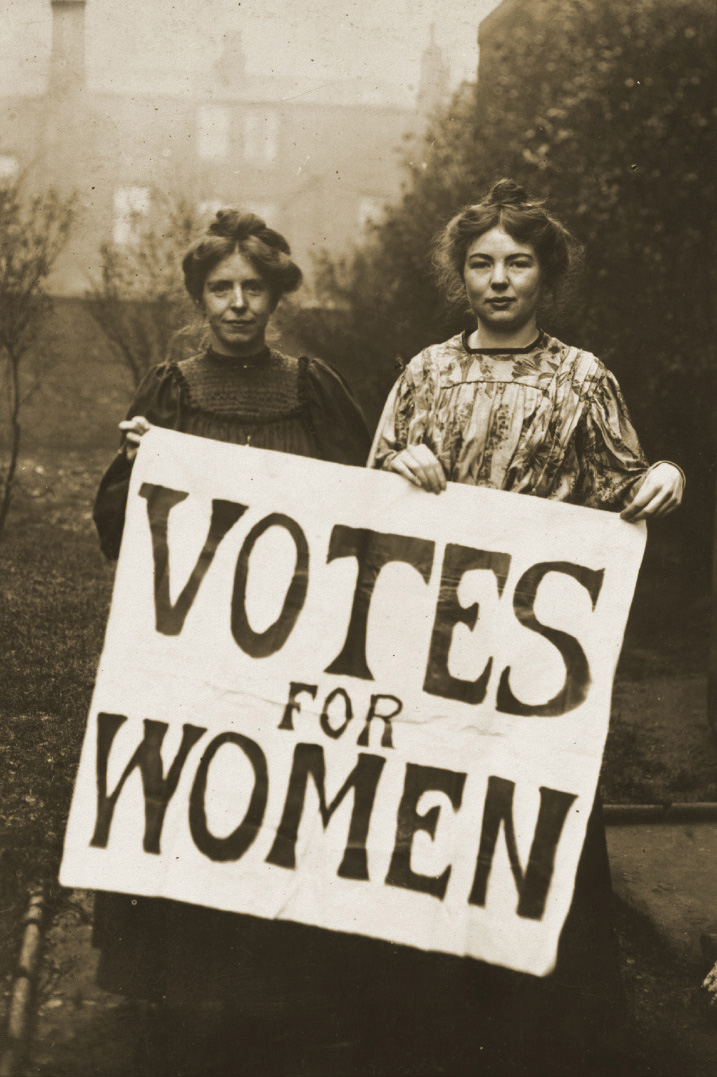
After the Women’s March on Washington there was a big question of, “Now what?” Thousands gathered to raise their voices in a battle cry heard across the country, and then it was over. But, that’s not entirely true. Though the march itself was over, that by no means signaled the end of the war. When the Suffrage movement had ended, women did not take that as a cue to take their winnings and move on. Instead, they used it as encouragement to see all of the possibilities for their future. So, during times of struggle and hopelessness, look back and see the impossibleness of what had been accomplished. Revel in the power of society and the strength of an individual. Change is possible if only we are brave enough to fight for it.

Build Up

It is no surprise that the fight for women’s rights started long ago, but the true spark of the Women’s March on Washington was the election of Donald Trump. The 2016 political climate was a tense one, tempers were rising and emotions flared. Hostility rose between differing political parties and no one knew what was going to happen. Then, the Republican Party won the election. Known for his misogyny, people were outraged at the election of Trump. This led to the organization of the rally, where hundreds of thousands of people attended to ensure their voice be heard.

Current Events

All over the country, women continue to march for their deserved rights. There is now an annual Women’s March on Washington. In fact, there are annual marches all over, even Eugene has one. The after effects of these protests are beginning to show. Women are beginning to get recognized for their achievements in sports and sciences. Movies depicting their incredible accomplishments such as Harriet and Hidden Figures. There is still much to do, but people’s efforts are creating change.

2017 Women’s March on Washington Essay


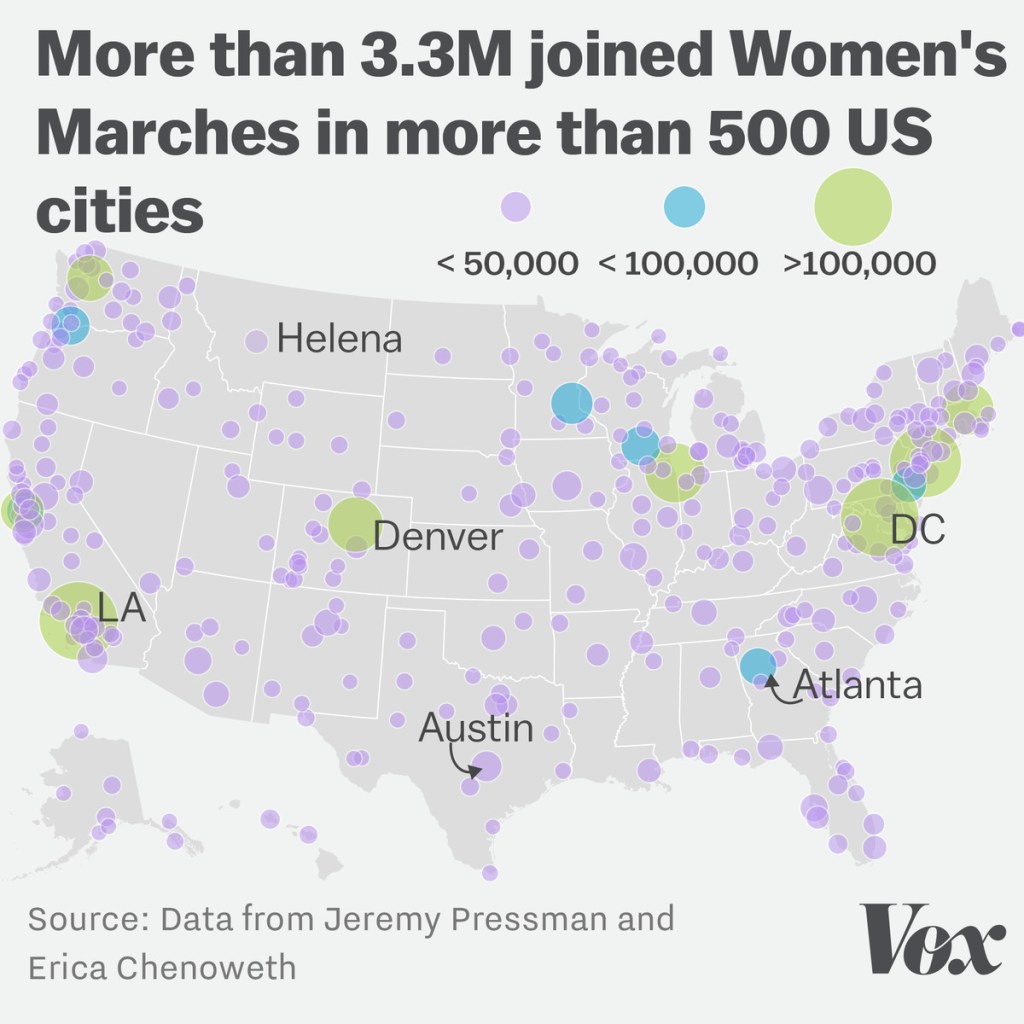
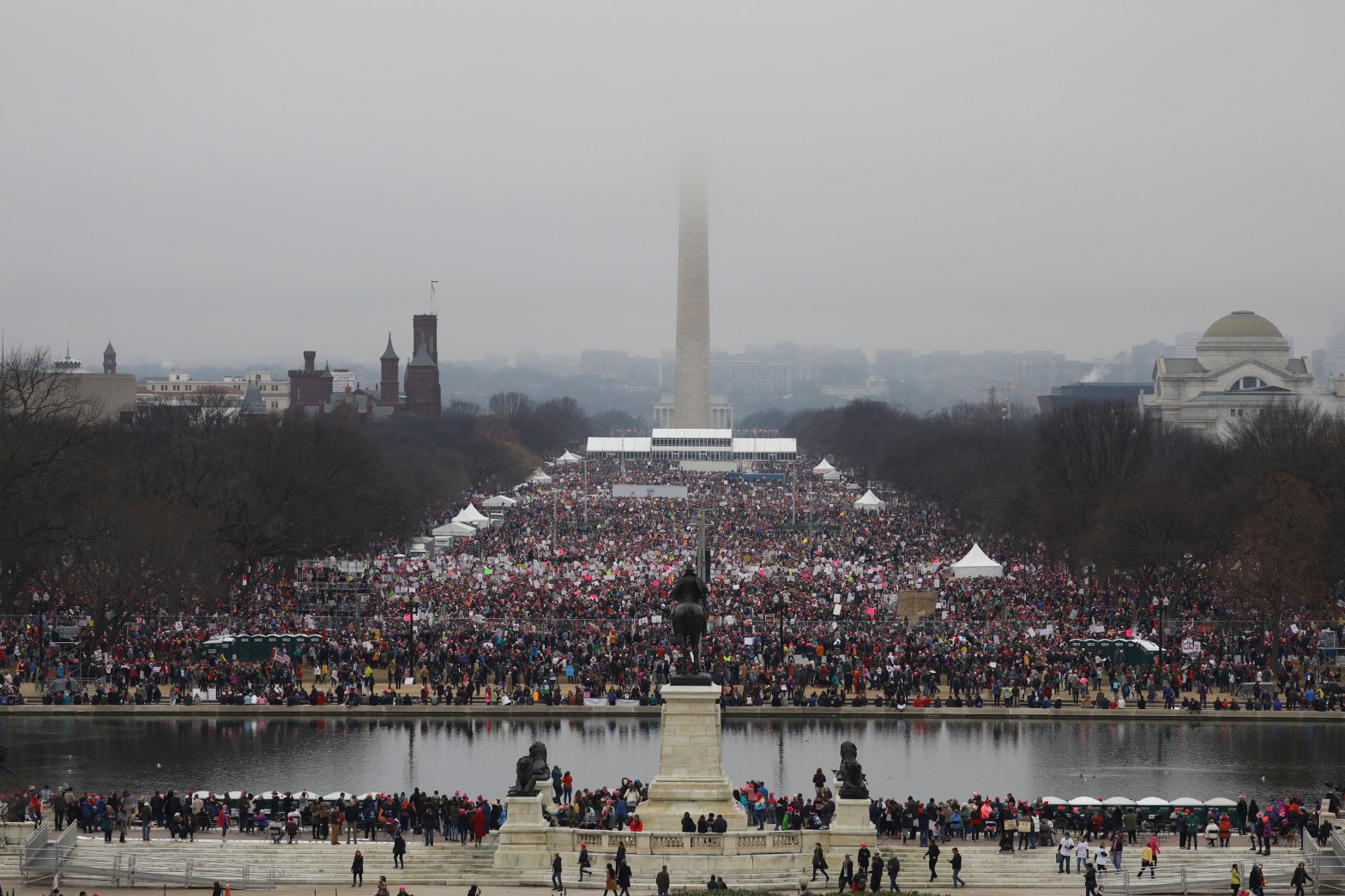
The winter of 2017, over five hundred thousand people congregated in Washington D.C. to fight the misogyny of the current government. Purposefully scheduled only a day after the inauguration of Donald Trump, people of all genders, sexulities, races, religions, and overall backgrounds joined each other and marched side by side. 

Many women have spent their entire lives protesting the inequality and sexism that rampages through the United States. From blatant harmful acts of sexual assault being dismissed by courts, to less noticeable slights of wage gaps the battle was never ending. The final straw breaking the camel’s back was the inauguration of a man known for his sexist remarks, and in several cases, for his sexual assault allegations. Donald Trump had become president, and women decided their country had taken it too far. So, they took a stand. 

In fact, many notable celebrities were in attendance. Scarlett Johanson, Madonna, and Lupita Nyong’o all made an appearance. Even more socialites were seen in locations other than Washington D.C. In New York people saw Naomi Watts and Mark Ruffalo. Los Angeles hosted Willow Smith, Ariana Grande, and Miley Cyrus. All over the country people fought for the betterment of their society. 

Of course, as with any change within a society (for the better or worse), there were those against the movement. Donald Trump himself made an attempt at downplaying the turnout, boasting untruthfully about the mass amount of people that showered him with praise at his inauguration. Still, the protesters marched proudly onwards, oftentimes accompanied by signs. Some were written using straight up facts and statistics, others used more creative tactics with song lyrics, quotes, or puns. 

I myself did not bring a sign, but I did in fact attend the 2017 Women’s March on Washington. My parents bought plane tickets, and flew us to a hotel in Washington D.C. where we met up with my grandmother. Before even reaching Washington, the excitement was electric in the air. On airplanes people proudly displayed their hats and t-shirts proclaiming their participation. Laughter and strength grew amongst people as they readied themselves for tomorrow’s big day. 

We woke up early, got ourselves ready, and began our journey to the march. We were packed tighter than sardines in the subway systems, the vastness of the crowds proved too much for those who wished to travel via cars. It wasn’t much better after exiting the tunnels. Massive screens displayed the speakers and performers, in some cases even that wasn’t enough and people would climb trees, signs, and streetlights. Anything to get a better view. The streets pulsated with energy and you could see the vigor in people’s eyes. 

On that day, nothing mattered except for the hypnotic excitement that filled everyone’s veins. There is nothing quite so all enveloping as being a part of something so much bigger than yourself.
Sources

Primary:

  1. New York Times: Published January 21, 2017 “2017 Women’s March Highlights” by Anemona Hortocollis (Article)

2. Planned Parenthood: Published January 24, 2017 “Looking Back on the Women’s March and Ahead to the Future by Steffie Badanes (Article)

3. Own Personal Experience

Secondary:

1. Society for US Intellectual History: Published January 28, 2017 “Historical Perspective:  The Women’s March of 2017 and the Woman Suffrage Procession of 1913” by Michele Rosen (Reflection/analysis/essay)

2. CNN: Published January 2017, 2019 “Women’s March on Washington” by Mark Kouzlarich

Design a site like this with WordPress.com
Get started